
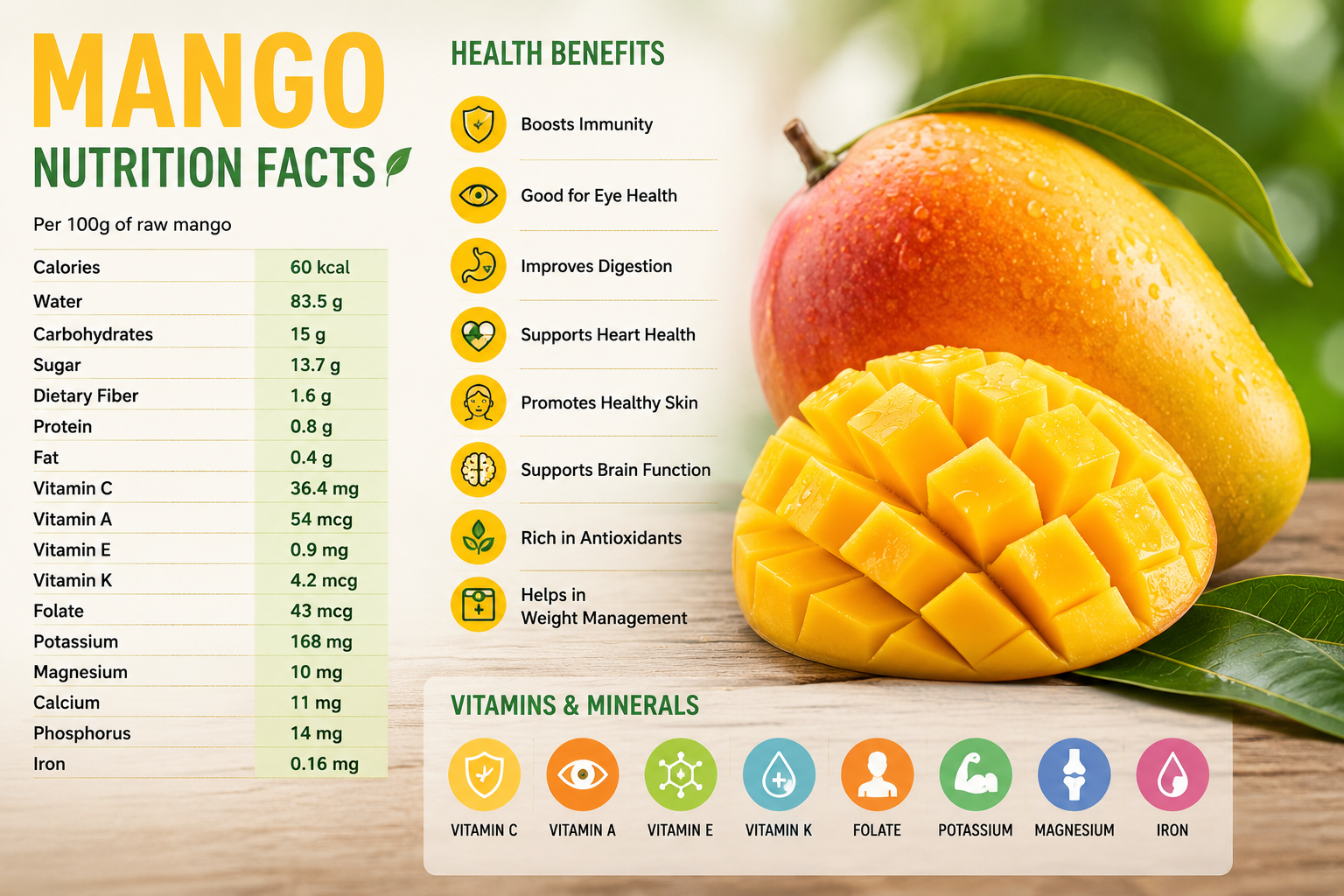
Mango Nutrition Facts
Mango is one of the world’s most popular tropical fruits, loved for its sweet flavor, juicy texture, and impressive nutritional value. Often called the “King of Fruits,” mango is rich in vitamins, minerals, antioxidants, and dietary fiber that support overall health.
Whether you enjoy fresh mango slices, smoothies, salads, or desserts, this delicious fruit provides numerous health benefits while being naturally low in fat.
Mango Nutrition Facts (Per 100g)
| Nutrient | Amount |
| Calories | 60 kcal |
| Water | 83.5 g |
| Carbohydrates | 15 g |
| Sugar | 13.7 g |
| Dietary Fiber | 1.6 g |
| Protein | 0.8 g |
| Fat | 0.4 g |
| Vitamin C | 36.4 mg |
| Vitamin A | 54 mcg |
| Vitamin E | 0.9 mg |
| Vitamin K | 4.2 mcg |
| Folate | 43 mcg |
| Potassium | 168 mg |
| Magnesium | 10 mg |
| Calcium | 11 mg |
| Phosphorus | 14 mg |
| Iron | 0.16 mg |
Calories in Mango
A medium-sized mango contains approximately:
- Calories: 150–200
- Carbohydrates: 35–45g
- Fiber: 4–5g
- Protein: 2g
- Fat: Less than 1g
Despite its natural sweetness, mango can fit into a balanced diet when eaten in moderation.
Vitamins Found in Mango
Mango is packed with essential vitamins.
Vitamin C
Vitamin C supports:
- Immune system
- Skin health
- Collagen production
- Faster wound healing
One serving provides over half of the recommended daily intake.
Vitamin A
Vitamin A promotes:
- Healthy eyesight
- Skin repair
- Immune function
- Cell growth
Vitamin E
Acts as an antioxidant and protects cells from oxidative damage.
Vitamin K
Supports:
- Bone health
- Blood clotting
Folate
Important for:
- DNA production
- Pregnancy
- Healthy cell growth
Minerals in Mango
Mango provides several essential minerals including:
- Potassium
- Magnesium
- Calcium
- Iron
- Copper
- Phosphorus
These minerals help regulate blood pressure, muscle function, and bone health.
Health Benefits of Mango
- Boosts Immunity
Mango contains vitamins A and C that strengthen the body’s natural immune defenses.
- Supports Eye Health
Vitamin A, lutein, and zeaxanthin may help maintain healthy vision.
- Improves Digestion
Dietary fiber supports digestive health and may help prevent constipation.
Natural digestive enzymes in mango also aid food digestion.
- Good for Heart Health
Potassium and antioxidants may help:
- Maintain healthy blood pressure
- Reduce inflammation
- Support cardiovascular health
- Promotes Healthy Skin
Vitamin C helps produce collagen, while vitamin A supports skin repair and renewal.
- Rich in Antioxidants
Mango contains beneficial plant compounds such as:
- Mangiferin
- Quercetin
- Beta-carotene
- Catechins
These antioxidants help protect cells from oxidative stress.
- Supports Brain Function
Vitamin B6 and folate contribute to normal brain function and nervous system health.
- Helps Maintain Healthy Weight
Although naturally sweet, mango is:
- Low in fat
- Contains fiber
- Helps increase fullness when eaten in moderation
Is Mango Good for Diabetics?
People with diabetes can usually enjoy mango in moderation as part of a balanced meal plan. Because mango contains natural sugars, portion control is important. Pairing mango with protein or healthy fats may help reduce rapid blood sugar spikes.
Always follow personalized advice from your healthcare provider or dietitian.
Is Mango Good During Pregnancy?
Yes.
Mango provides:
- Folate
- Vitamin C
- Vitamin A
- Potassium
These nutrients support maternal health and fetal development. Pregnant women should consume ripe, properly washed mangoes as part of a balanced diet.
Mango for Children
Mango is an excellent fruit for children because it provides:
- Vitamins
- Minerals
- Fiber
- Natural energy
Serve soft, ripe mango in age-appropriate pieces to reduce choking risk.
Possible Side Effects
Although mango is healthy, excessive consumption may cause:
- Digestive discomfort
- Increased calorie intake
- Elevated blood sugar in sensitive individuals
- Rare allergic reactions, especially from the peel or sap
Moderation is recommended.
How to Include Mango in Your Diet
Try mango in:
- Fresh fruit salads
- Smoothies
- Yogurt
- Oatmeal
- Salsa
- Chia pudding
- Frozen desserts
- Healthy snacks
Storage Tips
- Store unripe mangoes at room temperature.
- Refrigerate ripe mangoes.
- Cut mango should be stored in an airtight container and consumed within 2–3 days.
Frequently Asked Questions (FAQs)
How many calories are in one mango?
A medium mango contains approximately 150–200 calories, depending on its size.
Is mango high in sugar?
Yes, mango contains natural fruit sugars, but it also provides fiber, vitamins, and antioxidants.
Can I eat mango every day?
Yes, most healthy adults can enjoy mango daily in moderate portions as part of a balanced diet.
Is mango good for weight loss?
Mango can be included in a weight-loss diet when eaten in moderation and within your daily calorie goals.
Which vitamin is highest in mango?
Vitamin C is one of the most abundant vitamins in mango, followed by vitamin A.
Is mango a superfood?
While there is no official scientific definition of “superfood,” mango is highly nutritious and rich in beneficial vitamins, minerals, fiber, and antioxidants.
Conclusion
Mango is a delicious, nutrient-rich tropical fruit that offers an excellent combination of vitamins, minerals, fiber, and antioxidants. From supporting immunity and digestion to promoting healthy skin, eyes, and heart health, mango is a valuable addition to a balanced diet. Enjoy it in moderation to benefit from its natural sweetness and nutritional value.